
'We are playing with fire': Fears persist over battery storage
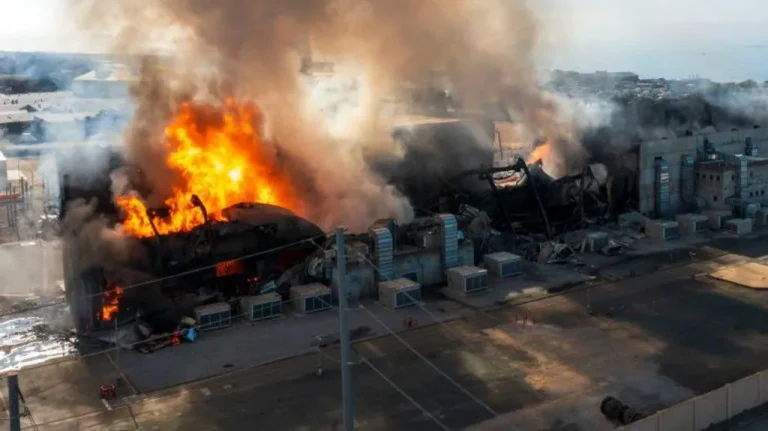
LGD in TECH – “We believe the use of technology-grade grown diamond for thermal management may have prevented this and similar dangerous situations.”
Robert Holden is worried about one of New York City’s five boroughs going up in flames.
“It makes absolutely zero sense why, now, these facilities are being sited practically in people’s backyards, and next to gas stations, all over Staten Island,” says the city councillor.
“Simply put, it is not just a bad policy, but a dangerous one, and the city is literally playing with fire by allowing this to happen.”
Holden is talking about proposals to build more battery energy storage system (Bess) centres – large-scale power storage sites based on the same lithium-ion batteries that are used in laptops and electric cars.
The batteries are stored, thousands together, in large metal boxes.
Such facilities are increasingly springing up all over the world, with 21.9 gigawatt-hours installed in Europe last year alone, according to industry group SolarPower Europe. That’s enough to power some 16 million homes.
And there’s a need for a great many more. Achieving net zero by 2050 – or getting anywhere near it – requires a massive shift to renewable power sources such as solar and wind.
And electricity produced by such renewables can go to waste unless it can be stored and then delivered at a time when it’s needed, such as everyone turning on the lights in the evening. And that’s where Bess come in.
“For the moment, in the European Union, what we are looking at is that we should increase battery deployments by a factor of 10,” says Driese Acke, deputy chief executive of SolarPower Europe.
While there’s currently around 75 gigawatt-hours of battery storage installed in the EU, he says that needs to rise to around 750 by 2030.
Robert Dryfe, professor of physical chemistry at the University of Manchester, says there are alternatives to battery storage.
These include cryogenic storage, where power from renewables is stored by chilling air into liquid form. When the liquid is then allowed to warm up it expands back into gas and can drive a turbine to make electricity.
Then there are long-established hydro power systems, whereby water is released from a higher reservoir to a lower one, also driving turbines.
Yet Prof Dryfe describes both cryogenic and hydro as “fairly niche devices”. “So really to keep pace with the increasing deployment of renewables it’s hard to see beyond electrochemical storage mechanisms,” he adds.
However, Bess technology is far from perfect. The biggest issue – and the one concerning protesters the most – is the installations’ potential vulnerability to fire.
In the UK, a fire at a Bess facility in Essex back in February took almost 24 hours to extinguish. A similar fire in Liverpool in 2020 took 59 hours to put out.
And in January of this year, a fire at one of the world’s largest Bess plants in northern California led to the evacuation of around 1,500 people and the closure of a major highway.
The cause of such blazes is a process called thermal runway. This can be triggered by events from short-circuits to physical damage and manufacturing defects, and which allows heat-producing chemical reactions to start within the battery. This can lead to the release of flammable (and toxic) gases, which can then explode.
And Bess facilities contain millions of battery cells that, if not shielded or widely-enough separated, allow fires to spread fast.
Meanwhile, when fires do occur, contaminants can be released into the air and water – although a recent review of large-scale Bess fires in the US since 2012 found that emissions are largely confined to the immediate vicinity of the fire.